Introduction
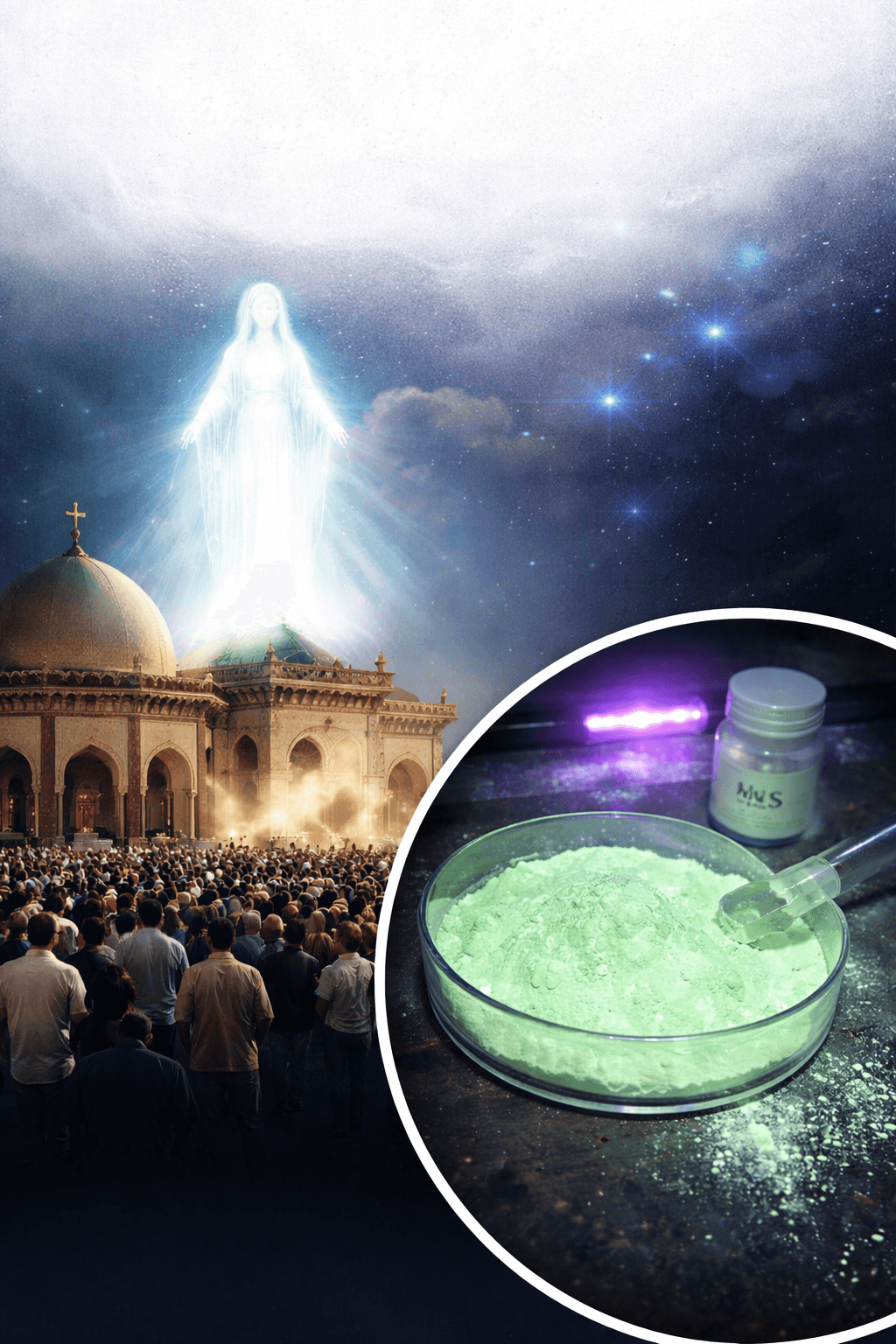
Between 1968 and 1971, thousands of witnesses reported seeing luminous apparitions above the Coptic Orthodox Church of Saint Mary in Zeitoun, Egypt. Travis Dumsday has argued that these reports constitute strong evidence for supernaturalism, claiming that naturalistic explanations are untenable given the scale, duration, and consistency of the reported phenomena.
This paper challenges Dumsday's argument. I contend that his rejection of naturalistic alternatives is premature and methodologically unsound. Specifically, I propose a Zinc Sulfide based photoluminescent-resin hypothesis as a chemically and historically plausible mechanism for the observed phenomena, one which Dumsday's framework fails to adequately address.
Dumsday's Argument
Dumsday's argument proceeds from the premise that the Zeitoun apparitions were witnessed by large, diverse crowds over an extended period. He argues that the breadth and consistency of testimony, combined with the absence of a plausible natural mechanism, warrants a supernatural explanation.
He specifically addresses and dismisses several candidate naturalistic explanations: mass hallucination, misidentification of natural light phenomena, and staged optical illusions. For each, he argues either that the explanation is empirically implausible given the documented conditions, or that it lacks the theoretical resources to account for all the reported features of the phenomena.
Dumsday's rejection of naturalistic alternatives rests on an incomplete survey of chemically and historically possible mechanisms.
A Naturalistic Alternative: The Zinc Sulfide Hypothesis
I propose that a photoluminescent display using Zinc Sulfide compounds, a technology available in the late 1960s, could account for the key visual features of the Zeitoun apparitions. Zinc Sulfide phosphorescent compounds were commercially available and used in various applications including instrument panels and decorative displays.
Applied to a surface in a resin carrier and charged by daylight exposure, such compounds could emit a sustained greenish-white luminescence visible at night and in low-light conditions. The architectural features of the church dome would have provided a natural mount for such material, and the reported "dove-like" and "female figure" shapes could be consistent with deliberate application patterns.
Objections and Responses
One might object that the scale of the reported phenomena — multiple apparitions over months — exceeds what such a mechanism could sustain. I respond that periodic reapplication would be feasible given access to the church structure, and that witness testimony from historical contexts is subject to both amplification and elaboration over repeated accounts.
A second objection concerns the reports of movement in the apparitions. However, atmospheric refraction, varying moisture conditions, and the psychology of expectant crowd observation are well-documented contributors to perceived movement in stationary luminous objects.
Methodological Critique of Dumsday
Beyond the specific hypothesis, I raise a broader methodological objection to Dumsday's approach. His argument requires showing not merely that existing naturalistic explanations are inadequate, but that no naturalistic explanation could be adequate. This is a significantly stronger claim, and one he does not establish.
The history of science gives us ample reason to be epistemically modest about such claims. Phenomena that once seemed to require supernatural explanation — lightning, disease, astronomical events — have been incorporated into naturalistic frameworks. The burden falls on Dumsday to show why religious experience phenomena should be categorically different.
The burden falls on Dumsday to show why religious experience phenomena should be categorically exempt from naturalistic inquiry.
Conclusion
I have argued that Dumsday's rejection of naturalistic explanations for the Zeitoun apparitions is not sound. A Zinc Sulfide based photoluminescent hypothesis represents a chemically plausible alternative that Dumsday's framework does not adequately address. Furthermore, his broader methodological approach — dismissing naturalism from the available candidates — sets a standard he does not meet.
This does not establish that the Zeitoun phenomena were produced by natural means. It establishes only that Dumsday has not demonstrated they could not have been. The evidential weight of the Zeitoun reports, considered on its own, is insufficient to justify a supernatural conclusion.
References
- 1.Dumsday, Travis. 2019. "The Argument from Religious Experience at Zeitoun." Philosophia Christi 21 (1): 131–152.
- 2.Nelson, Michael. 1976. Photoluminescent Materials: Chemistry and Applications. New York: Academic Press.
- 3.Palmer, John. 2009. "Testimony, Amplification, and the Analysis of Collective Religious Experience." Religious Studies 45 (3): 317–336.
- 4.Swinburne, Richard. 2004. The Existence of God. Second edition. Oxford: Oxford University Press.
- 5.Youssef, Hany N. 1971. The Apparitions of the Virgin Mary in Zeitoun, Egypt. Cairo: Coptic Diocese Press.
Acknowledgements
I would like to express my sincere gratitude to Professor Paul Draper of the Department of Philosophy at Purdue University for his invaluable guidance, thoughtful feedback, and encouragement throughout the development of this paper. His mentorship challenged my thinking, refined my arguments, and greatly enriched the quality of this work. I am deeply grateful for the time, insight, and intellectual generosity he offered throughout this process.
About the Author
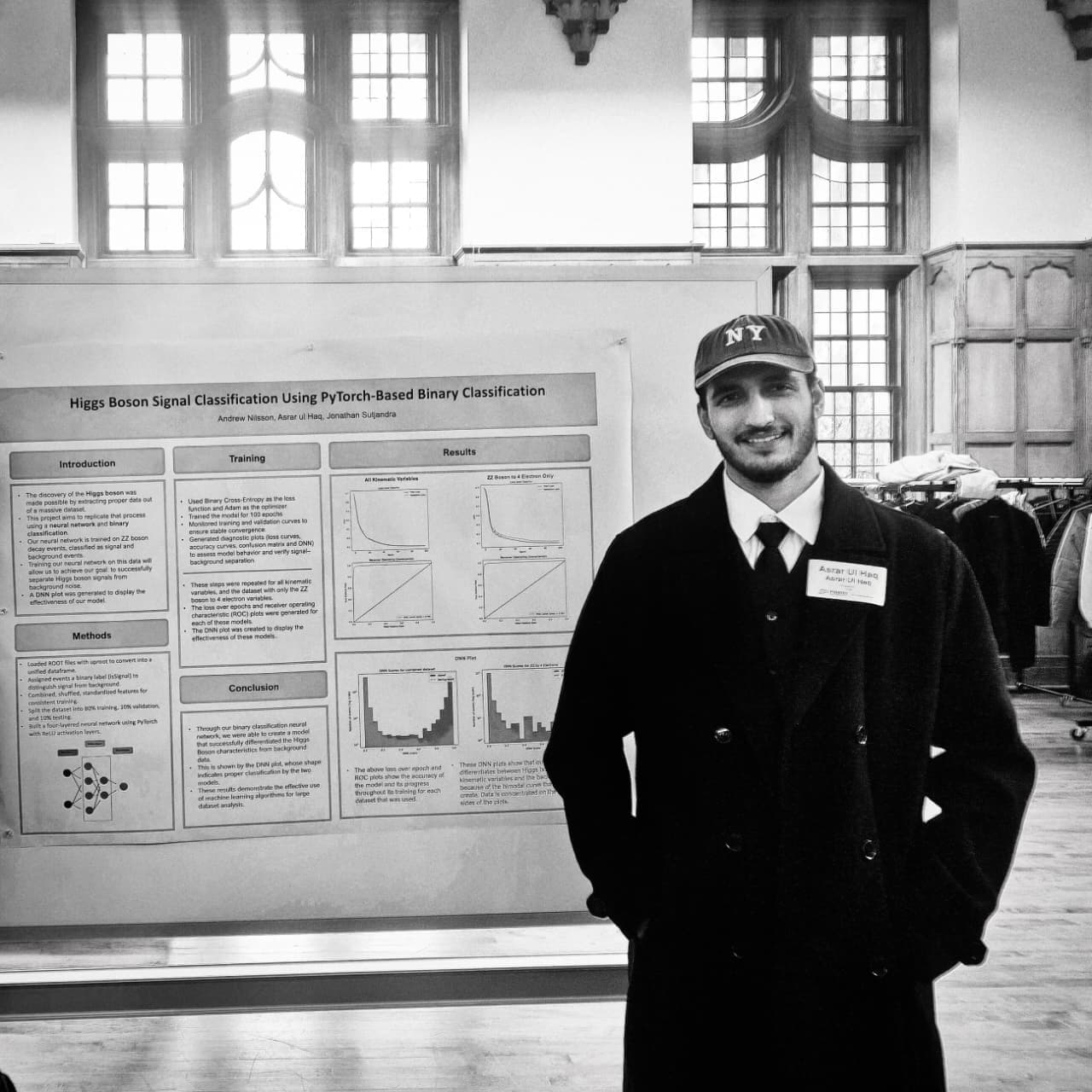
Asrar ul Haq
Mechanical Engineering & Philosophy Student

Purdue University
Asrar ul Haq is a Mechanical Engineering and Philosophy student at Purdue University. His work explores the intersection of engineering, philosophy, scientific inquiry, design, and human understanding. Through interdisciplinary research, he seeks to bridge technical innovation with deeper philosophical questions about knowledge, creation, and the natural world.
Related Research