Introduction
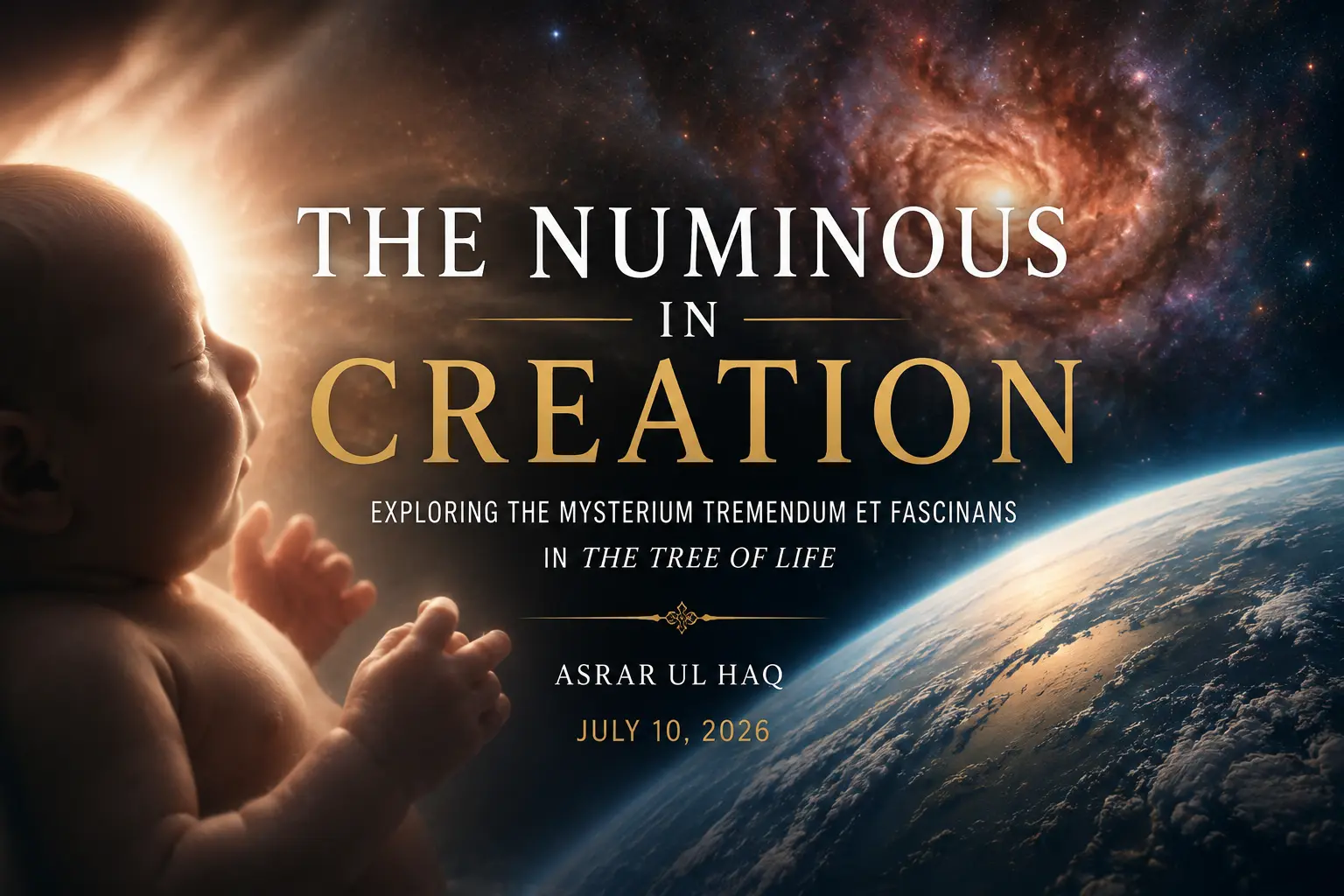
In his work The Idea of the Holy, Rudolf Otto claims that the "numinous" contains a non-rational element of experience which is very separate from a purely conceptual or moral definition. Otto argues that while the numen is "wholly other," certain artifacts — even if those are not religious at all — can still be capable of causing the elements which are associated with causing a numinous experience.
In this paper, I argue for the thesis that the "Creation" clip from Terrence Malick's film The Tree of Life when paired with Zbigniew Preisner's Lacrimosa, is an artifact that can evoke a numinous experience. I will first use Otto's six-element classification and then subsequently the Draper and Keller revisions regarding ethereality and ecstasy to show how this artifact evokes what Otto calls the mysterium tremendum et fascinans. Finally, I will address the objection of subjective mediation to show that while the experience is filtered through the individual, the artifact still remains an objective center for the numinous experience.
Otto's Six Elements of the Numinous
To establish the artifact's ability to cause a numinous experience, I will first analyze it using the six elements of Otto's phenomenology.
Awefulness
Otto describes this element as an "inward trembling" or a "fear of a specifically religious sort." In the artifact, the opening scenes of the deep space nebulae and solar flares are very silent and violent in a particular way, which creates an uncanny atmosphere. The visual of the horsehead nebula at 03:03 looking like a shadow of an uncanny creature overwhelms the viewer with awefulness.
It is so different from mundane reality that it puts the viewer in the feeling of presence of a "potentially dangerous" power which is not necessarily evil or harmful in the common way, like the fear of getting hit by a car in traffic, but it is specifically an alien sort of fear.
"An inward trembling" — a fear of a specifically religious sort, distinct from every other kind of fear.
Majesty
According to Otto, this element causes a "creature-feeling," a sense of one's own "nothingness" or being "dust and ashes." The camera panning across vast galactic dust clouds and scale of the galaxies throughout the film humbles the viewer with use of this deep space perspective which causes a feeling of human insignificance.
I find that this closely resembles the "majesty" found in Godfrey Reggio's Koyaanisqatsi in that the overwhelming scale of natural landscapes similarly causes a feeling of insignificance.
Mystery
According to Otto, this is the encounter with something "incommensurable with our own nature," leading to a "stupor." Similar to the time-lapse sequences in Koyaanisqatsi that make the familiar world look irreducibly mysterious, scenes particularly 1:59–2:09 with jellyfish-like life forms moving randomly and the whispers of "answer me" in the background causes mystery of similar sort.
Fascination
Along with tremendum, the numen is also "compelling and alluring" which is a great example of harmony of contrast. This is where the music component becomes a necessary component in that now the numinous experience can not be just attributed to the visuals only but the combination of music and visuals.
Preisner's Lacrimosa fills the listener with an "intense longing" for what is called "glorious beatitude." At 2:19, the spindle galaxy appears with high soaring vocals which fill the viewer with this "intense longing." Here the music transforms the previous cold violence of evolution into this "glorious beatitude," pulling the viewer toward the beatitude than pushing them into awe.
The numen is "compelling and alluring" — a harmony of contrast that draws the viewer inexorably forward.
Elements the Artifact Fails to Express
While the above mentioned elements are clearly identifiable, the artifact lacks two of the Otto's elements. The artifact arguably fails to express the element of Augustness in a way that generates a profound feeling of being "unclean." The artifact is cosmic rather than being ritualistic or religious which causes it to lack the "specifically religious sort of value" that requires "atonement."
Furthermore, the slow pacing does not have the "unstoppable, destructive" sense of energy that Otto associates with the "wrath of God." According to Otto, this energy element is a sense of "vitality, passion and impetus." While this element is not clearly findable in the artifact, it is weakly arguable that the scene from 3:35–3:53 showing streaking asteroid and plasma eruption evokes this energy or urgency. It presents a feeling that is active and "impetuous" compared to something being static.
The Draper and Keller Revision
Draper and Keller in Seeing God in a Solar Eclipse suggest that the fascinans consists of ethereality and ecstasy. I find these additions particularly useful for analyzing this artifact.
Ethereality comes through "lightness" and fragile, luminous beauty. The very first shot from 0:01–0:08 of the flickering flame against the black void is a primary example of this. Conversely, ecstasy represents the "rapturous" side of fascination, the feeling of being emotionally or spiritually "carried away." As the Lacrimosa reaches peaks at 2:19, it evokes such a feeling that could represent this ecstasy.
Ethereality — the fragile luminous beauty of a flame flickering against a black void — is the first impression the artifact offers.
Objection: The Problem of Subjective Mediation and Empirical Evidence
A significant objection to my thesis comes from my specific comprehension of what Draper and Keller call mediated perception. They suggest that we perceive the Numen (the primary percept) by virtue of a secondary percept (the artifact). The objection is as follows: if the response to primary percept is mediated by secondary percept, there is a possibility that the interaction with the secondary percept is shaped by a person's previous experiences, then the numinous experience is a subjective projection rather than being an inherent property of the artifact.
To be more clear, if the indirect relation between the primary percept and secondary percept as a step ladder is "determined by the culture of their subjects," then no artifact is inherently "apt" to evoke such an experience. To test this objection, I conducted a survey at the Purdue Fluids Lab using this specific artifact as a stimulus. I presented the video to a group of students to see the difference in their phenomenological responses.
The results of my survey provided strong evidence for the role of subjective mediation. Out of the total 16 participants, 6 people reported that they "didn't experience anything" of a numinous nature and thought of the video as a "cool scientific visualization." Conversely, 10 people said that they had a strong emotional or spiritual response from feelings of awe, insignificance, or peace.
A viewer with a strong background in fluid dynamics might process the solar flares through a lens of rational physics, which acts as a "filter" that blocks this concept of numen. My response to this objection is that "aptness" does not necessarily need to have this universal efficacy. While the survey shows that subjective mediation might be plausible, the fact that 10 people did have a numinous experience suggests that the artifact contains the "ideograms" necessary to trigger the experience regardless if the secondary percept is interfering or not.
So I can say, much like Otto's preference for Bach's Sanctus, the artifact does provide the medium but whether the viewer's "subjective mediation" allows them to see through that medium is a separate psychological variable.
10 of 16 participants at the Purdue Fluids Lab reported a strong emotional or spiritual response — feelings of awe, insignificance, or peace.
Conclusion
In conclusion, I can state that the presented artifact is capable of evoking a numinous experience. Although my survey at the Purdue Fluids Lab points to the fact that the experience is mediated and possibly dependent on the observer's background, the artifact's ability to cause numinous experience in a significant portion of viewers supports the strong argument of numen being the objective center of these experiences.
References
- 1.Draper, Paul, and Lael Keller. 2024. "Seeing God in a Solar Eclipse: A New Look at the Phenomenology of Numinous Experience." In Eclipse and Revelation, edited by Henrike C. Lange and Tom McLeish. Oxford: Oxford University Press.
- 2.Otto, Rudolf. 1950 [1917]. The Idea of the Holy. Second edition, translated by John W. Harvey. London: Oxford University Press.
- 3.Preisner, Zbigniew. 1998. Lacrimosa - Day of Wrath. From Requiem for my Friend. New York: Erato.
- 4.Reggio, Godfrey. 1982. Koyaanisqatsi. Island Alive.
- 5.Tyler Bickle Channel Returns. 2022. "The Tree of Life (2011) - Lacrimosa: Zbigniew Preisner HD. Terrence Malick." YouTube. https://www.youtube.com/watch?v=m-1q3CgKAPk
- 6.Purdue University Libraries and School of Information Studies. 2024. "Library Research Assistant (AI)." West Lafayette, IN: Purdue University. https://guides.lib.purdue.edu/library-research-assistant
Acknowledgements
I would like to express my sincere gratitude to Professor Paul Draper of the Department of Philosophy at Purdue University for his invaluable guidance, thoughtful feedback, and encouragement throughout the development of this paper. His mentorship challenged my thinking, refined my arguments, and greatly enriched the quality of this work. I am deeply grateful for the time, insight, and intellectual generosity he offered throughout this process.
About the Author
Asrar ul Haq
Mechanical Engineering & Philosophy Student

Purdue University
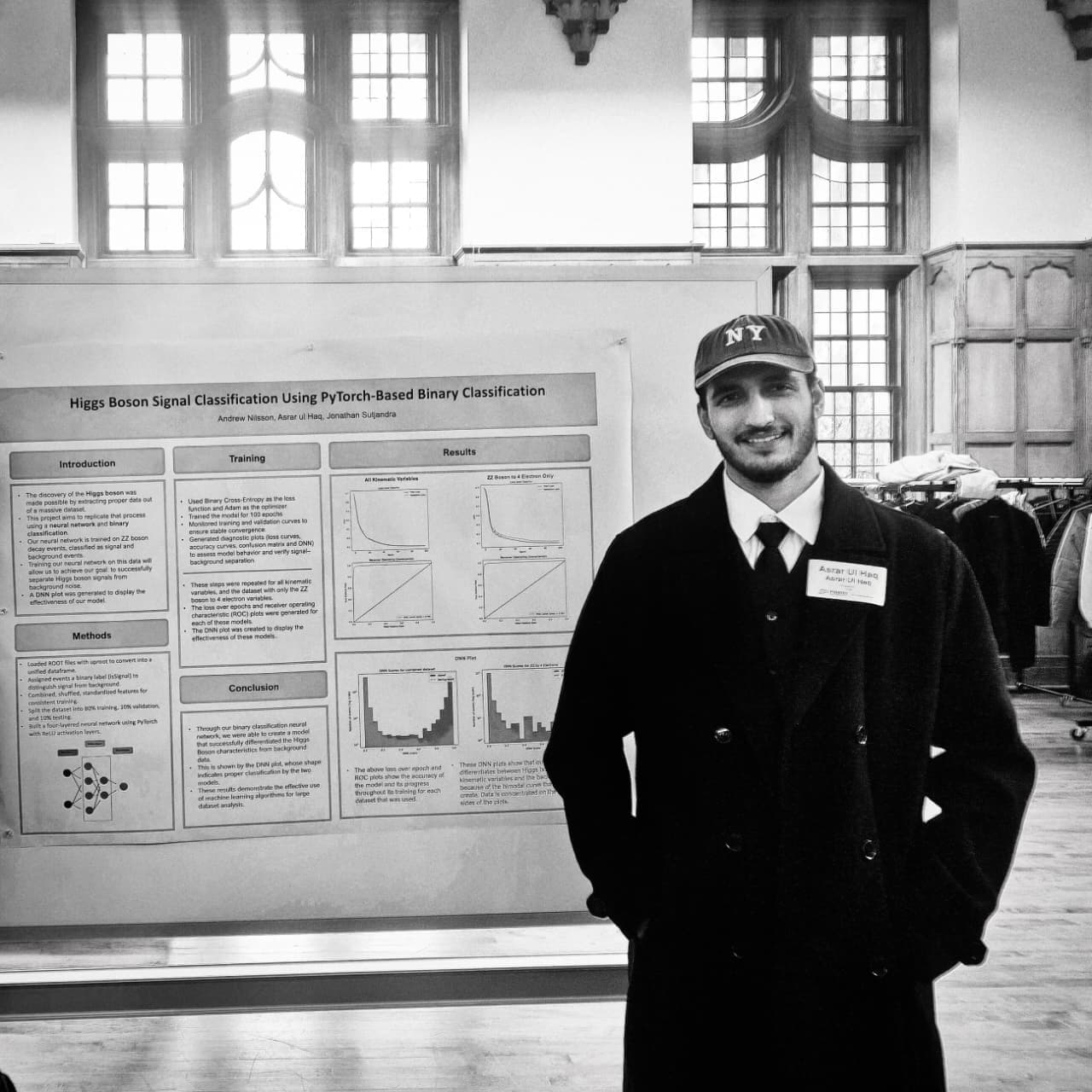
Asrar ul Haq is a Mechanical Engineering and Philosophy student at Purdue University. His work explores the intersection of engineering, philosophy, scientific inquiry, design, and human understanding. Through interdisciplinary research, he seeks to bridge technical innovation with deeper philosophical questions about knowledge, creation, and the natural world.
Related Research